Borrowed, Flipped, and Made New: The Case for Remix as a Creative Language of Its Own
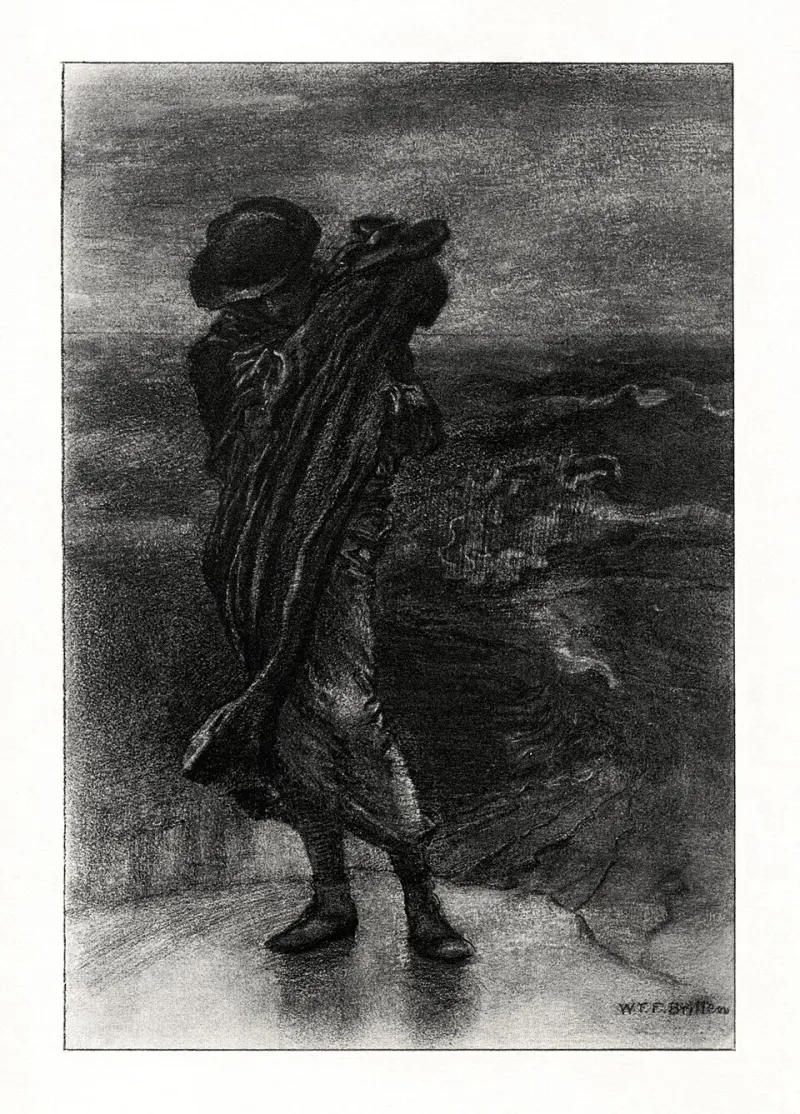
Photo: William Edward Frank Britten (1848–1916) Adam Cuerden (restoration), Public domain, via Wikimedia Commons
Somewhere along the way, American creative culture developed a weird hang-up about originality. The idea that real artists only make things from scratch — that influence should be invisible, that borrowing is somehow less than inventing — has calcified into a kind of gatekeeping that doesn't hold up under even casual scrutiny. Every genre of music that's ever mattered in this country was built on transformation. Blues became rock. Jazz became hip-hop. Hip-hop became everything.
And yet the stigma persists. Cover bands get dismissed. Remixers get side-eyed. Fan artists get threatened with takedowns. The independent creative community has had enough of it.
Across the US, a wave of indie musicians, visual artists, and performers are pushing back — not by ignoring the conversation around originality, but by reframing it entirely. Remix, they argue, isn't a lesser form of creation. It's a distinct creative language with its own grammar, its own history, and its own demands.
What We Talk About When We Talk About Remix
First, let's get loose with the definition, because that's where most of the interesting stuff lives. In its broadest sense, remix culture includes everything from a musician flipping a sample into something unrecognizable, to a visual artist repainting a Renaissance composition with contemporary subjects, to a singer stripping a pop anthem down to a single guitar and recontextualizing every word.
What these acts share isn't laziness or lack of imagination. They share a fundamental engagement with existing culture — a conversation across time, genre, and medium that requires deep familiarity with the source material and real creative vision to pull off.
"People act like sampling is cheating," says Brooklyn-based producer and musician Kwame Ellis. "But to flip something well, you have to understand it completely. You have to hear what's already in it that the original artist didn't use, or used differently. That's not easier than writing from scratch. It's a different skill set."
Ellis's recent project — a full-length instrumental record built entirely from samples of obscure 1970s educational film soundtracks — is a good example of what he means. The source material is recognizable to almost no one. The emotional landscape he's built from it is entirely his own.
The Gatekeeping Problem
The pushback against remix culture tends to come from two directions. The first is legal: copyright law in the US is a genuine minefield for anyone working with existing material, and the chilling effect it has on independent creators is real and disproportionate. Major labels can afford to license samples and fight infringement suits. A 23-year-old making beats in their apartment cannot.
The second is cultural: the idea, most common in fine art and literary circles, that reinterpretation signals a failure of originality. This one is harder to legislate but easier to argue against, because the historical record simply doesn't support it. Warhol built a career on appropriation. Dylan built a career on folk music's tradition of remaking. Hip-hop's entire architecture is built on the sample.
What's changed in the current indie moment is that creators are less willing to apologize for working in this tradition. They're naming their influences explicitly, framing reinterpretation as homage and conversation rather than hiding it, and building communities around shared reference points.
Chicago-based visual artist and muralist Soledad Park makes work that directly quotes and transforms imagery from Mexican muralism, Soviet constructivism, and American comic book art — all in the same piece. "I'm not hiding where this comes from," she says. "The whole point is that you can see the conversation happening. That's what makes it interesting."
Covers as Creative Statements
In the music world, the cover song has always occupied a weird middle ground. On one hand, it's a staple of live performance and a practical way for emerging artists to build a set list. On the other, it's often treated as a placeholder for "real" material — something to grow out of.
But a number of indie artists are making the case that a great cover isn't a placeholder. It's an argument. When you strip a song down, speed it up, change its key, or transplant it into a completely different genre, you're making a claim about what the song is actually about — what survives the transformation and what doesn't.
Singer-songwriter and multi-instrumentalist Priya Nair, based in Austin, released an EP last year consisting entirely of reimagined country classics performed in the style of South Indian classical music. The project was polarizing in exactly the way she intended. "I wanted people to hear what was already there," she explains. "These songs have structures and emotional cores that are completely universal. I was just removing the wallpaper."
The EP found its audience not despite its conceptual weirdness but because of it. Fans of both genres found their way to it, and the conversation it sparked — about influence, about Americana, about what country music actually is — felt genuinely new.
Navigating the Legal Gray Zone
It would be dishonest to write about remix culture without acknowledging that the legal landscape is genuinely treacherous. Fair use doctrine in the US theoretically protects transformative work, but "transformative" is a judgment call that gets made in courtrooms, and indie creators rarely have the resources to fight even frivolous claims.
The practical strategies that have emerged in the independent community are a mix of the principled and the pragmatic. Some creators work exclusively with public domain material — a deep well that gets deeper every January when copyright terms expire. Others use creative commons licensed work, building within communities that have explicitly opted into a culture of reuse. Still others take calculated risks, operating in spaces where enforcement is unlikely, and are transparent about the choices they're making.
There's also a growing movement around what some creators call "ethical sampling" — a framework that goes beyond legal compliance to consider whether the artists being sampled have been credited, whether communities whose music is being drawn from are being compensated or acknowledged, and whether the transformation adds something meaningful rather than just extracting value.
The Community That Remix Builds
Perhaps the most underappreciated thing about remix culture is what it does socially. When a creator remixes, covers, or reinterprets something, they're declaring an allegiance. They're saying: this matters to me, this influenced me, this is worth revisiting. That declaration creates connection — with the original artist, with other fans of the source material, and with anyone else who's been shaped by the same cultural touchstones.
In indie creative communities, that connective tissue is everything. It's how scenes form, how collaborations start, how audiences find work they didn't know they were looking for.
The remix renaissance happening right now isn't a sign that indie creators have run out of ideas. It's a sign that they've gotten comfortable claiming their place in a long, living conversation — one that started long before them and will keep going long after. That's not derivation. That's tradition. And tradition, done right, is one of the most radical things an independent creator can tap into.