Playing the Long Game: How Indie Musicians Are Building Cult Followings Without Chasing Virality
Photo: SebVonFall, CC BY-SA 4.0, via Wikimedia Commons
Let's be honest about what chasing virality actually looks like from the inside. You spend a week obsessing over a hook, you time your post to hit peak traffic hours, you tag every relevant account, you cross-post to four platforms simultaneously — and then you watch the video stall at 800 views while something your friend made in twenty minutes gets picked up by a mid-tier influencer and cracks a million. The system is a lottery, and most people don't win.
A growing number of independent musicians have decided to stop playing.
Not because they've given up on building an audience — quite the opposite. They're building audiences that are smaller, more devoted, and more sustainable than anything the viral pipeline tends to produce. They're doing it through intentional underground strategies, direct community cultivation, and a willingness to embrace the niche rather than chase the mainstream. And some of them are making a genuinely good living doing it.
The Problem with Going Viral
Here's a thing the music industry doesn't talk about enough: virality and fandom are not the same thing. A viral moment brings in a flood of passive observers — people who heard your song in a video, clicked through once, and will likely never engage again. Real fandom is something different. It's people who follow your creative process, who buy your merch not because it's trendy but because they feel genuinely connected to what you make, who show up to your show in a city they've never visited because you're playing there.
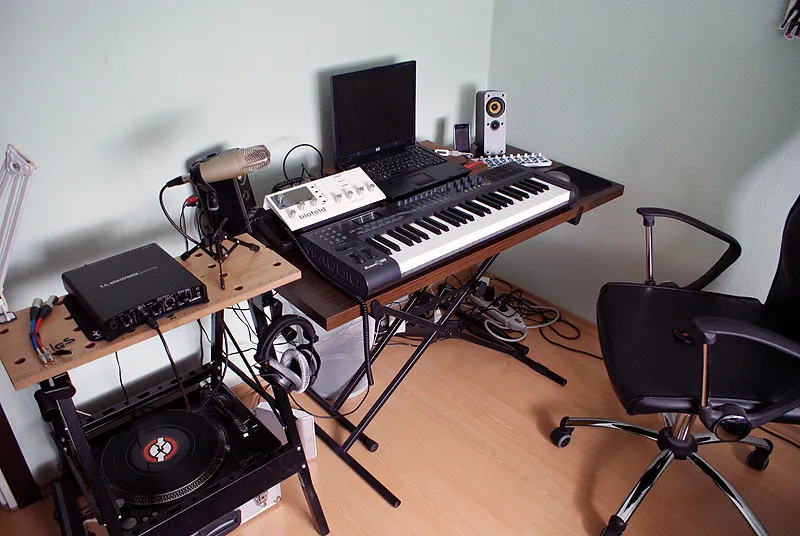
Producer and multi-instrumentalist Theo Nakamura, who makes textured ambient-electronic music out of a home studio in Albuquerque, describes the difference this way: "A viral hit is like a crowd walking past a busker. They drop a dollar, they keep walking. A cult fanbase is like a group of people who followed you home because they needed to know what happens next."
Theo has about 14,000 followers across platforms — a number that would get him laughed out of most label pitch meetings. But his Bandcamp releases consistently sell out their limited physical editions within hours, his Patreon sustains his studio costs comfortably, and his last small-venue tour in the Southwest sold out every date. None of it happened because of an algorithm. All of it happened because he spent three years being very deliberate about who he was making music for and how he was inviting them in.
Finding the Niche and Going Deep
The strategic foundation for most of these creators isn't "how do I reach the most people" but "how do I find my people and make them feel like they discovered something." That framing shift changes everything about how you present your work.
Singer-songwriter and bedroom pop artist Camille Okafor, based in Atlanta, spent her first two years releasing music the conventional way — posting on Instagram, pitching to playlist curators, trying to land blog coverage. She got a decent amount of traction but felt like she was constantly performing for an audience that didn't really know her.
The pivot came when she started a private Discord server for listeners who had bought her first EP. No algorithm. No public metrics. Just a space where she shared demos, talked about her influences, and asked people what they were hearing in her music. Within six months, that Discord had become the actual engine of her creative community — a place where her most devoted listeners felt like collaborators rather than consumers.
"The Discord people are the ones who show up," she says. "They're the ones who tell their friends about me in a way that actually converts, because they're not just sharing a link — they're sharing a whole story about who I am and what I'm doing."
Manufacturing Micro-Trends from the Ground Up
Some of these artists are going even further, deliberately seeding micro-trends and aesthetic movements within their communities as a way of generating organic cultural momentum. Think of it as worldbuilding for your fanbase — creating a distinctive visual language, a set of references, an inside vocabulary that makes being a fan feel like being part of something.
Electronic producer and sound designer Remi Voss, who operates out of Chicago, has built an entire aesthetic universe around his music — specific color palettes, recurring visual motifs, a fictional geography that shows up across his album artwork and social posts. His fans don't just listen to his music; they create fan art in his visual language, write about his fictional world in the Discord he runs, and treat new releases like installments in an ongoing narrative.
"I'm not trying to make a trend," Remi explains. "I'm trying to make a world that people want to live in for a while. Trends come and go. Worlds stick around."
This approach requires patience and creative investment that most viral-chasing strategies don't. But the payoff is a fanbase with an unusually high retention rate — people who stick around through stylistic evolutions and quiet periods because they're invested in the larger creative project, not just a single song.
The Underground Infrastructure
What makes all of this work is a set of tools and platforms that operate largely outside the main algorithmic feeds. Discord and Substack for direct community access. Bandcamp for sales that don't require a streaming payout. Patreon for recurring support. Small newsletters with high open rates. Physical releases — vinyl, cassettes, limited-edition prints — that create tangible touchpoints and genuine scarcity.
None of these tools are new. But the strategic intentionality with which independent musicians are using them together has gotten considerably more sophisticated. The artists who are thriving in this model treat their community infrastructure with the same care they give their music — maintaining it, evolving it, and making sure it stays genuinely valuable to the people inside it.
The irony is that in rejecting the viral system, these artists have stumbled into something the music industry has always said it wanted but rarely actually cultivated: genuine, durable fan loyalty. The kind that doesn't evaporate the moment the algorithm stops surfacing your name.
Why This Matters Right Now
There's a broader conversation happening in independent music right now about what success actually means. Streaming numbers are largely a vanity metric for artists at the indie level — the payouts are too small to matter much unless you're hitting tens of millions of plays. Meanwhile, a small but devoted fanbase buying physical releases, supporting on Patreon, and showing up to shows can generate real, sustainable income at a fraction of the scale.
The creators building cult followings aren't opting out of ambition. They're redefining what they're ambitious for. Not the lottery ticket of a viral moment, but the slow accumulation of something that actually lasts — a community of listeners who are genuinely, deeply invested in what they make next.
In a music landscape that often feels like it rewards speed and spectacle above everything else, that kind of patience looks a lot like a superpower.