No Label, No Problem: The Bedroom Producers Rewriting the Music Industry's Rulebook
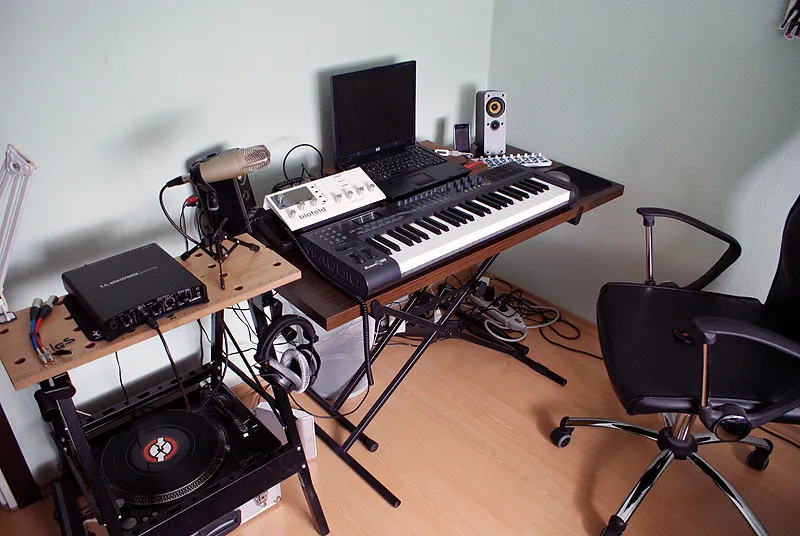
Photo: LiquidMolly, CC BY-SA 2.0, via Wikimedia Commons
Not long ago, making a record meant convincing someone in a corner office that you were worth the investment. You needed a label, a producer with a Rolodex, and a budget that most people couldn't dream of. Today? You need a laptop, a decent microphone, and something worth saying.
The bedroom producer movement isn't new—lo-fi pioneers were doing this stuff on four-track cassette machines decades ago—but the scale of what's possible now is genuinely staggering. Artists are releasing music that sounds indistinguishable from major-label product, built entirely in home setups costing less than a used car. And listeners are responding.
The Tools That Changed Everything
Walk into any musician's apartment in Brooklyn, Austin, or Seattle right now, and there's a decent chance you'll find some version of the same setup: a laptop running Ableton Live or Logic Pro, an audio interface like the Focusrite Scarlett, a condenser mic, and a pair of studio headphones. Maybe some acoustic foam on the walls. Maybe just a closet full of hanging clothes doing the same job for free.
Digital Audio Workstations (DAWs) have been the real game-changer. Logic Pro runs $199.99—a one-time purchase—and contains more production power than a professional studio had twenty years ago. FL Studio, a favorite among hip-hop and electronic producers, offers a lifetime license that means you pay once and get updates forever. Then there are free options like GarageBand for Mac users and LMMS for the truly budget-conscious, both of which have launched genuine careers.
Plugin technology has leveled the playing field even further. Sample libraries, virtual instruments, and mixing tools that once required racks of expensive hardware now live inside a computer. A producer in Tulsa can access the same reverb algorithms as a studio engineer in Los Angeles.
Real Artists, Real Numbers
Take someone like Clairo, who built an early following with bedroom-pop recordings that sounded intentionally intimate and unpolished. Or Lil Uzi Vert, who started releasing music independently before any major label came calling. These aren't outliers anymore—they're blueprints.
Tyler, the Creator famously self-produced large portions of his catalog. Billie Eilish recorded her debut album in her brother Finneas's bedroom in Highland Park, Los Angeles. That album won four Grammy Awards including Album of the Year. The bedroom wasn't a limitation. It was the point.
For artists working further outside the mainstream, the numbers are still genuinely life-changing. An independent artist keeping 85-100% of streaming royalties through distributors like DistroKid, TuneCore, or CD Baby is operating on a completely different economic model than someone signed to a major deal, where the label often recoups its investment before the artist sees a significant check.
How Distribution Platforms Broke the Gate Wide Open
The distribution side of the equation has changed just as dramatically as the recording side. Services like DistroKid charge as little as $22.99 a year for unlimited releases across Spotify, Apple Music, Amazon Music, Tidal, and dozens of other platforms. That's it. Your music goes everywhere.
Bandcamp, which has become something of a cultural institution for independent music, lets artists sell directly to fans and keep the vast majority of revenue. On Bandcamp Fridays—a promotional initiative the platform introduced during the pandemic—the site waives its revenue share entirely, and artists have collectively earned tens of millions of dollars through those events alone.
Social media has become the new radio. TikTok, in particular, has proven capable of sending completely unknown artists into the stratosphere overnight. A snippet of a song in the right video can generate more exposure than a traditional press campaign ever could, and it costs nothing.
What the Major Labels Are Doing About It
The labels aren't sitting still. Many have shifted strategies to focus on what they can still offer that a bedroom producer can't easily replicate: major sync licensing deals, mainstream radio promotion, tour infrastructure, and the kind of marketing muscle that can still move the needle at scale.
But they've also started hunting for talent differently. A&R departments now spend significant time scrolling SoundCloud, monitoring TikTok trends, and watching which independent artists are gaining traction organically. In some ways, the bedroom producer movement has turned independent releases into a free audition process for the majors.
The power dynamic has shifted, though. Artists who've built their own audiences have real leverage now. They can negotiate better deals, retain more rights, or choose not to sign at all.
Practical Tips for Getting Started
If you're thinking about launching your own project from home, here's what actually matters:
Start with what you have. GarageBand is free on Mac. Your phone mic is better than you think for demos. Don't wait for perfect gear.
Learn the fundamentals of mixing. YouTube has thousands of free tutorials. Understanding gain staging, EQ, and compression will make your recordings sound dramatically more professional without spending anything.
Treat your room. Sound bouncing off bare walls is your biggest enemy. Hang some thick curtains, record in a closet, or stack pillows strategically. Acoustic treatment doesn't have to cost money.
Release consistently. The algorithm rewards activity. A song every few weeks beats a perfect album every two years when you're building an audience from scratch.
Use DistroKid or TuneCore to get on streaming platforms. Don't sit on music waiting for someone to discover you in a local venue. Put it everywhere.
Build your community. Respond to comments. Collaborate with other independent artists. The bedroom producer scene is genuinely collaborative, and that culture is one of its greatest strengths.
The Sound of Independence
There's something that keeps coming up when you talk to independent producers about why they chose this path over chasing a label deal. It's not just about money or control, though those things matter. It's about the music itself sounding like them—unfiltered, uncompromised, made on their own terms.
The bedroom isn't a consolation prize. For a growing number of artists, it's exactly where they want to be.