Ditch the Feed: Why Indie Creators Are Done Waiting for the Algorithm to Notice Them
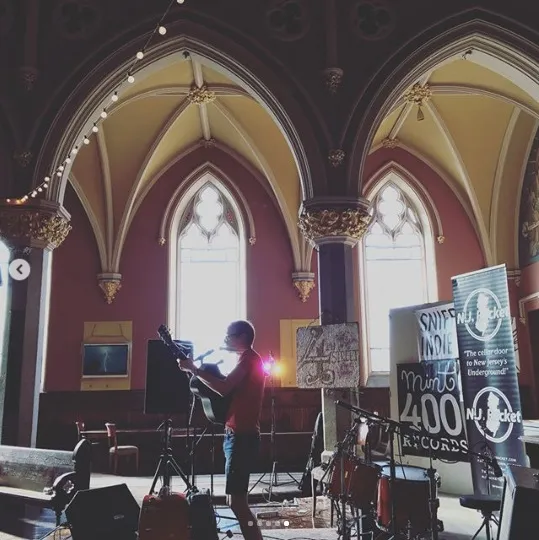
Photo: NorthPark1417, CC BY-SA 4.0, via Wikimedia Commons
There's a particular kind of exhaustion that comes with being an independent creator in 2024. You make something genuinely good — a track, a zine, a short story — you post it, and then you wait. You tweak the caption. You add hashtags. You post at 7 PM on a Tuesday because some blog told you that's when engagement peaks. And then... nothing. Or worse, a little dopamine hit that disappears by Thursday.
A growing number of indie creators are done with that cycle. They're not abandoning the internet — they're just using it differently. Instead of chasing reach, they're chasing depth. And the results are quietly reshaping how independent culture actually survives.
The Problem With Playing by the Platform's Rules
Algorithms are designed to serve the platform, not the creator. That's not a conspiracy theory — it's just business. Platforms want engagement, session time, and ad revenue. Your artistic vision is incidental to that goal. When a musician drops a new record, the algorithm doesn't ask whether it's meaningful or boundary-pushing. It asks whether it looks like the last thing people clicked on.
For independent creators — people without label budgets, PR firms, or industry connections — that model is essentially a lottery. You might catch a wave. More likely, you won't. And even if you do, the audience you pick up from a viral moment often has the shelf life of a trending sound.
"I had a song blow up on a short-form video platform a couple years back," says Marcus Webb, a singer-songwriter based out of Nashville who releases music under the name Hollow Road. "Hundreds of thousands of plays. I got maybe forty new followers who actually stuck around. It felt hollow — no pun intended."
That experience pushed Marcus toward a different approach. He started a monthly email newsletter. He played smaller, more intimate shows in living rooms and record stores. He reached out directly to music bloggers and independent Spotify playlist curators. Slowly, his actual fanbase — the people who come back, buy merch, show up to shows — started to grow.
Going Direct: The Newsletter Renaissance
Email newsletters have had a serious glow-up in the indie creator world, and it makes sense when you think about it. An email list is yours. It doesn't disappear if a platform changes its algorithm or gets acquired. It doesn't bury your message under sponsored content. When you send something, it lands in someone's inbox because they asked it to.
Creators across music, visual art, and storytelling are leaning hard into this. Independent illustrator Dani Reyes, who creates comics and character art under the handle Paperweight Studio, has been building her newsletter list for three years. She now has over 8,000 subscribers — a number she calls "way more valuable than my 40,000 Instagram followers."
"My Instagram reach is maybe 3% of my followers on a good day," she says. "My newsletter open rate is around 45%. Those are people who actually want to hear from me. I could lose every social media account tomorrow and still have a real business."
Dani's newsletter isn't just a sales pitch — it's more like a sketchbook. She shares work-in-progress pieces, behind-the-scenes stories, and occasional personal essays about her creative process. It feels intimate, which is exactly the point.
The Power of the Local Scene (Yes, Still)
Here's something the internet tends to forget: physical community still works. Maybe better than it ever did, precisely because it's become rarer.
Independent musicians who invest in their local scenes — playing shows, collaborating with other local artists, showing up to other people's gigs — build something that no streaming playlist can replicate: genuine social capital. People who see you play in a 60-person venue and feel like they discovered you? Those people become evangelists.
Chicago-based producer and multi-instrumentalist Yara Osei has been intentional about this. Rather than spending her energy on TikTok growth hacks, she's co-organized a monthly listening event in her neighborhood where local artists share new work in progress. What started as ten people in a coffee shop has grown into a rotating community of over 150 regulars.
"I've gotten more meaningful connections — collaborators, fans, licensing opportunities — from that room than from anything I've posted online," Yara says. "And everybody in that room knows somebody. That's how word actually spreads."
Micro-Audiences Are the New Mainstream
One of the biggest mindset shifts in the indie creator world right now is the revaluation of small. A decade ago, "only" having a few thousand listeners felt like failure. Today, creators are recognizing that a tight community of 2,000 deeply engaged fans can be more sustainable — financially and creatively — than a passive audience of 200,000.
The math actually works out. If 2,000 people care enough to buy a $20 album or a $15 zine, that's real money. If 2,000 people support you on Patreon at even $5 a month, that's a livable income for a lot of independent creators. The goal isn't to go viral. The goal is to matter — to the right people, consistently.
This philosophy has a name in some circles: the "true fans" model, a concept that's been floating around creative communities for years but feels newly urgent now that algorithmic gatekeeping has gotten so aggressive.
Practical Moves That Actually Work
So what are indie creators actually doing? A few tactics that keep coming up:
Direct-to-fan platforms: Bandcamp for music, Gumroad for art and writing, Patreon for ongoing work. These platforms take a cut, but they put the creator in direct relationship with the buyer.
Community-first content: Instead of broadcasting, engaging. Responding to every comment. Asking questions. Creating spaces — even just a group chat — where fans can talk to each other.
Cross-creator collaboration: Independent artists supporting other independent artists. Guest features, joint newsletters, shared shows. Building a rising tide rather than competing for scraps.
Consistent, low-pressure touchpoints: Not every post needs to be a big announcement. A quick studio update, a photo from a show, a sketch that didn't make it into the final piece — these small moments build the kind of familiarity that turns casual followers into real fans.
The Long Game
None of this is fast. That's kind of the whole point. Building a real audience — one that sticks around because they genuinely connect with what you make — takes time, consistency, and a willingness to show up even when the numbers aren't impressive.
But for independent creators who've spent years chasing algorithmic approval, there's something genuinely liberating about opting out of that race. The algorithm doesn't know you yet. Maybe you don't need it to.