Hidden in Plain Sight: The Underground Networks Quietly Launching the Next Wave of Indie Culture
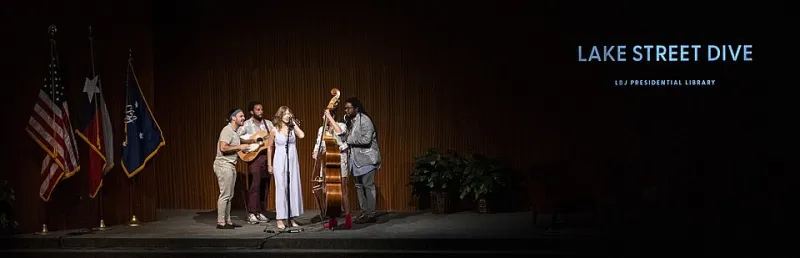
Photo: LBJ Library from Austin, PDM-owner, via Wikimedia Commons
By the time most people discover something, the interesting part already happened somewhere else.
That's not cynicism — it's just how culture moves now. The projects that feel like they exploded overnight almost always spent months or years gestating in tight-knit corners of the internet: Discord servers with a few hundred members, Patreon communities sharing work-in-progress files, underground music forums where the regulars argue passionately about albums that haven't been released yet. These aren't waiting rooms for mainstream success. They're ecosystems unto themselves, with their own rules, gatekeepers, and creative energy.
And increasingly, they're the real engine of independent culture in America.
The New Underground Looks Like a Server List
Forget the image of underground culture as something happening in basements and back alleys. In 2024, the underground has a channel structure and a roles menu. Discord — originally built for gamers — has quietly become one of the most important infrastructure tools for independent creators across music, visual art, comics, and beyond.
The appeal is easy to understand. Discord servers create a sense of place that most social media platforms don't. There are specific channels for specific conversations. There's a community identity. New members go through a kind of soft onboarding just by reading the pinned messages and figuring out the vibe. It's closer to joining a club than following an account.
For indie creators, that friction is actually a feature. The people who find their way into a niche Discord server and stick around are self-selecting for genuine interest. They're not passive scrollers who clicked follow and moved on. They showed up, introduced themselves, and started participating.
"My Discord has maybe 600 people in it," says Tomás Guerrero, an independent comic artist from Los Angeles who publishes his work under the name Bruise Collective. "But those 600 people have funded two Kickstarters, spread my work to journalists and curators I never could have reached on my own, and honestly shaped the direction of the comic more than any editor I've worked with. They're not just fans — they're collaborators."
Patreon as Creative Community, Not Just Crowdfunding
Patreon gets talked about mostly as a revenue tool, and sure, the money matters. But some of the most interesting things happening on the platform have less to do with funding and more to do with the communities that form around sustained creative work.
When a creator posts exclusive content, work-in-progress updates, and voice memos explaining their process to a Patreon community, something shifts. The relationship stops being transactional. Patrons start to feel like insiders — people with genuine stakes in the project's success. And insiders talk.
Independent musician and visual artist Sasha Pryor, who makes experimental folk music and hand-drawn art prints in Portland, Oregon, has cultivated a Patreon community of around 400 people over four years. Those 400 people have generated an outsized amount of real-world impact: they've gotten her music placed on independent film projects, connected her with gallery owners, and built a word-of-mouth network that stretches across the country.
"I've had journalists reach out to me saying they heard about my work from a Patreon supporter," Sasha says. "That's wild to me. These are people who paid $8 a month to support my work, and they're out there actively advocating for it. That's not something you can manufacture."
The Forum Faithful
Before Discord, before Patreon, there were forums. And while the old-school message board format has been declared dead approximately nine hundred times, it refuses to actually die — especially in music communities.
Places like independent hip-hop forums, experimental music subreddits, and genre-specific message boards still function as powerful taste-making ecosystems. The regulars on these platforms have long memories and strong opinions. They document emerging artists obsessively, debate influences and techniques at length, and champion work that mainstream platforms wouldn't touch.
Getting cosigned in one of these communities — having your work discussed seriously by people who know the genre deeply — carries a different kind of weight than going viral. It's a signal to other insiders that something is worth paying attention to. And insiders, it turns out, include a lot of people with real cultural power: journalists, label A&Rs, booking agents, and other artists.
"I got my first real press coverage because a writer saw my music being discussed in a forum thread," says Keva Miles, an indie R&B producer from Atlanta. "Not because I pitched anyone. Not because I ran ads. Because people who cared about the music were talking about it in a place where the right person happened to be reading."
Who Actually Controls the Gatekeeping Now?
One of the most interesting things about these underground networks is the question of who holds the keys. In the old model, gatekeepers were obvious: labels, publishers, radio programmers, major critics. They decided what got through and what didn't.
In the new underground, gatekeeping is more diffuse and more democratic — but it still exists. The moderators of influential Discord servers shape what gets signal-boosted and what gets ignored. The power users on niche forums set the tone for what's considered credible. The early Patreon supporters of a creator become de facto ambassadors.
This decentralized gatekeeping isn't always fair or perfect. Cliques form. Certain aesthetics get favored. There's still plenty of bias baked into who gets welcomed and who gets overlooked. But the barriers to entry are lower, the feedback loops are faster, and the criteria for what "good" means are more varied than anything a single label executive or magazine editor could impose.
When Underground Breaks Through
The most compelling part of this ecosystem is what happens when something built in these intimate spaces starts to cross over. It rarely looks like a sudden explosion. It looks more like water finding its level — spreading steadily through connected communities until it reaches people who didn't even know they were looking for it.
The independent comics world has seen this repeatedly. Projects that started as Kickstarters promoted in small Discord communities, or webcomics that found their initial audience through Reddit threads, have ended up with publishing deals, animation pitches, and national press. The underground wasn't a stepping stone — it was the foundation.
Same story in music. Experimental and genre-defying artists who built real communities in niche spaces have found those communities translating into streaming numbers, festival bookings, and eventually, label interest — often on their own terms because they came in with leverage.
Why This Matters for Independent Culture
What these networks represent, at their best, is a genuinely alternative infrastructure for creative work. Not alternative as in fringe or obscure — alternative as in built on different principles. Principles like mutual investment, shared taste, and long-term relationship rather than short-term engagement metrics.
For independent creators navigating a landscape that often feels rigged toward whoever already has the most resources, these underground ecosystems offer something rare: a way to build something real, with people who actually care, before the mainstream ever shows up.
And if the mainstream never shows up? That's okay too. The work still happened. The community still exists. That's more than most algorithms will ever give you.