Ink, Wax, and Paper: Why Independent Creators Are Picking Up Analog Tools as an Act of Resistance
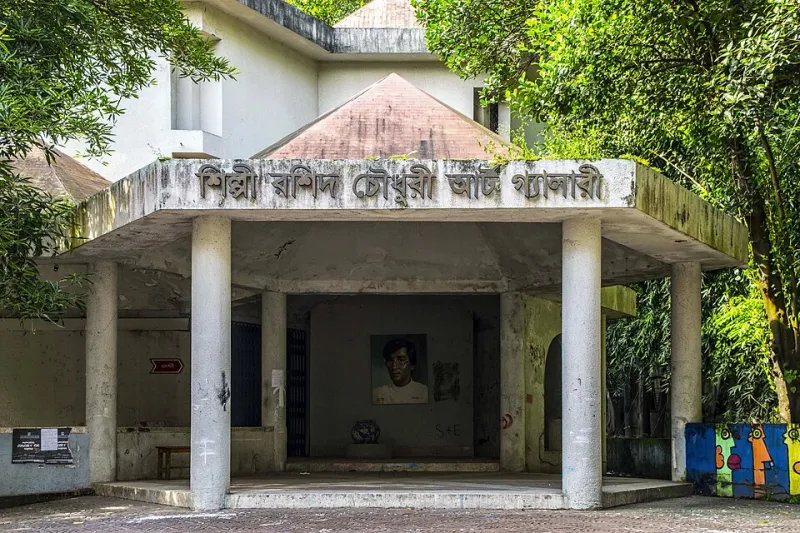
Photo: Intakhab, CC BY-SA 4.0, via Wikimedia Commons
There's a sketchbook sitting on Mara Delgado's kitchen table in Portland, Oregon. It's beat up, coffee-stained on the back cover, and stuffed with loose paper scraps held in by a rubber band. She's been drawing in it every day for the past two years — and not a single page has been uploaded anywhere.
"That's kind of the whole point," she says.
Mara is a zine artist and illustrator who spent the better part of a decade building her presence on social platforms. She had followers. She had engagement. She also had the slow, creeping realization that everything she made was being fed into a machine she had zero say over. "At some point I looked at my analytics dashboard and thought — whose work is this, really? Because I'm the one making it, but the platform is the one learning from it."
She's not alone in that feeling. Across the US, a growing number of independent creators are making a deliberate choice to step back from digital-first workflows — not out of technophobia, not out of nostalgia, but as a calculated response to the way digital platforms extract value from creative labor.
The Data Problem Nobody Talks About Enough
When you upload a drawing to a major platform, post a track to a streaming service, or even draft a story in a cloud-based writing app, you're not just sharing your work. You're feeding behavioral data into systems designed to study, categorize, and monetize your patterns. Which colors get more engagement. Which chord progressions keep listeners on longer. Which narrative structures drive clicks.
For a lot of indie creators, that feedback loop has started to feel less like useful insight and more like a leash.
Jameel Harris, a Chicago-based musician who records to cassette four-track, puts it bluntly: "When I was making music for Spotify, I could feel myself writing toward the algorithm. Longer intros got penalized. Songs under two and a half minutes did better. I wasn't making music anymore — I was optimizing content." He started recording to tape about eighteen months ago and says the shift changed not just his process but the actual sound of what he makes. "There's no algorithm for tape. There's just the song."
This is the part of the analog revival that doesn't get discussed enough in mainstream coverage. It's rarely framed as a political act. But for a lot of independent creators, that's exactly what it is.
What "Ownership" Actually Means When It's Physical
There's something legally and practically significant about a physical object that digital files simply don't replicate. A painting you made in your studio is yours in a way that a digital file stored on a platform's server just... isn't, not really. Terms of service can change. Platforms can shut down. Data can be scraped, licensed, or used to train AI systems without your explicit consent.
Sophia Tran, who runs a small letterpress operation out of her apartment in Austin, started thinking about this when she read through the updated terms of a popular design platform she'd been using. "They had this clause about using uploaded content for 'product improvement.' I realized my design work was being used to train their AI tools. I hadn't agreed to that — or I had, buried in like forty pages of legalese."
She moved her entire design workflow to physical media. Sketches on paper, prints on her letterpress, distribution through local shops and direct mail. Her reach is smaller now. She's fine with that. "I'd rather have a hundred people hold something I made in their hands than have a million people scroll past it while their data gets harvested."
This isn't just a niche perspective. The conversation around AI training data and creative work has exploded in the past couple of years, and a lot of indie creators are responding by simply removing themselves from the equation.
Analog as Creative Autonomy, Not Just Aesthetic
It's worth being clear: the appeal here isn't purely ideological. Analog tools also just do things digital tools don't, and for a lot of creators, that's its own kind of freedom.
Paint behaves unpredictably. Tape saturates in ways that plugins approximate but never quite nail. A typewriter doesn't autocorrect your voice into something smoother and more generic. The friction that analog tools introduce — the happy accidents, the physical constraints — is generative in ways that perfectly optimized digital environments often aren't.
Denver-based comic artist Tomás Reyes has been drawing his ongoing series entirely by hand, scanning only for printing purposes, and refusing to post high-resolution files anywhere. "The texture of my linework is mine. I don't want it scraped and replicated. So I keep the originals physical, I keep the scans low-res, and I sell the actual pages."
His readers get original art. He gets paid directly. No platform takes a cut. No algorithm decides who sees his work.
A Practical Resistance, Not a Perfect One
None of this is without compromise. Going analog, even partially, creates real friction. Distribution is harder. Reaching new audiences requires more legwork. Mara still uses email to let people know when her new zine is available. Jameel still has a Bandcamp page. Sophia still has an Instagram, though she posts far less and never uploads high-resolution work.
The goal, for most of these creators, isn't total digital abstinence. It's about being intentional — about deciding which parts of your creative process you're willing to put inside a system that profits from studying you, and which parts you're keeping for yourself.
"I'm not anti-technology," Mara says, closing her sketchbook. "I'm pro-having-something-that's-just-mine."
In an environment where the line between creative output and data commodity gets blurrier every year, that's not a small thing to want. And increasingly, it looks like the most radical creative act available is just picking up a pen.