Dear Artist: What Indie Creators Discovered When They Finally Opened Their Inboxes
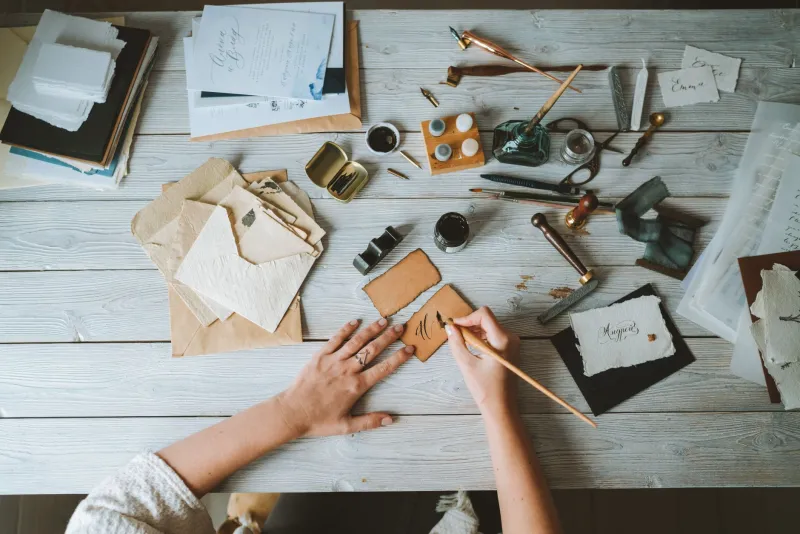
Somewhere between the comment sections, the DM requests, and the contact forms that pile up like unopened mail on a kitchen counter, there's a quiet revolution happening. A handful of independent creators — illustrators, musicians, comic artists, zine makers — have started doing something that sounds almost embarrassingly simple: they're reading their fan mail. All of it. On purpose.
And what they're finding is genuinely surprising.
The Inbox Nobody Talked About
For most of the social media era, the relationship between creators and their audiences has been filtered through engagement metrics. Likes, shares, saves, follows — these became the shorthand for "people care about what you're making." The actual words people wrote? Those got buried under the weight of volume, anxiety, or just the general chaos of running a one-person creative operation.
But some indie creators started noticing something. The numbers told one story. The messages told another.
Take illustrators who post their work online and watch the algorithm do its thing — a piece goes semi-viral, the follower count ticks up, and then... silence returns. Except it's not silence. It's just noise that looks like silence until you slow down long enough to actually read it.
One comic artist who runs a small Substack and sells prints through her own site described the shift like this: she'd been treating her inbox like a to-do list item she'd never get to. One slow Sunday, she finally sat down with a cup of coffee and just read. Three hours later, she had six pages of handwritten notes — not responses, just ideas her readers had accidentally handed her.
"They weren't giving me feedback," she said. "They were telling me what the work meant to them. And half the time, it meant something I hadn't even consciously put in there."
What the Messages Actually Say
Here's the thing nobody tells you about fan mail: most of it isn't about you. Not really. It's about the person writing it.
That's not a criticism — it's actually the whole point. When someone takes the time to write a message to an independent creator, they're usually processing something. They heard a song that cracked them open at exactly the right moment. They saw a panel in a comic that described a feeling they'd never been able to name. They found a piece of art that made them feel less alone in whatever particular corner of life they were stuck in.
For indie creators who actually read these messages, the effect is double-edged. On one side, it's emotionally heavy in a way that nobody warns you about. These aren't corporate fan interactions — there's no buffer, no PR team, no carefully managed brand voice. It's just you and another human being who connected with something you made in your bedroom or studio or kitchen table at 2am.
On the other side, it's an extraordinary creative resource.
Musicians describe finding the emotional center of their next record buried in a listener's description of where they were when they first heard a song. Visual artists talk about discovering which pieces in a series actually landed — not which ones performed best, but which ones meant something — and using that information to steer their next body of work. Comic creators have found entire storylines suggested, unintentionally, by the way readers described their favorite characters.
The Anti-Algorithm Research Tool
There's a practical dimension to this that's easy to overlook. Fan mail is, among other things, the most honest market research an indie creator can access. It's unsolicited, unprompted, and completely unoptimized for any platform's engagement model.
Algorithms are good at telling you what people clicked on. They're terrible at telling you why. A message from a reader, listener, or viewer fills in that gap in ways that no analytics dashboard ever could.
Several indie creators have started treating their inboxes like a kind of ongoing focus group — not in a cynical, extractive way, but in the sense that they're genuinely curious about the gap between what they intended and what landed. Sometimes those two things are perfectly aligned. Often they're not. And the space between them is where the most interesting creative decisions live.
One musician who makes ambient instrumental tracks described getting a long message from a listener who used his music while caring for a sick parent. The listener wasn't asking for anything — just sharing. But that message completely reframed how the musician thought about what he was making and who it was for. His next EP was, by his own account, the most intentional work he'd ever released.
Collaboration You Didn't See Coming
Another thing that happens when you actually read your messages: collaborators show up.
Not in the transactional, "let's do a collab for the reach" sense. In the quieter, more organic sense of discovering that someone in your audience has skills, perspectives, or ideas that genuinely complement your own work.
A zine artist in Portland described finding a writer through her inbox — someone who'd been reading her visual work for two years and had been writing short fiction inspired by it, privately, with no intention of ever sharing it. They eventually made a collaborative zine together. It sold out in a week.
These connections don't happen through algorithms or networking events. They happen because someone took the time to write a real message and someone else took the time to read it.
The Emotional Weight Nobody Talks About
It would be dishonest to make this all sound like a productivity hack. Reading fan mail is also hard.
Not every message is warm and affirming. Some are confused, some are critical, some are just strange. And even the genuinely moving ones carry weight. There's a reason most creators build distance between themselves and their audience — it's protective. Staying in the work, staying behind the screen, is easier than sitting with the full human reality of who's on the other side.
But the indie creators who've committed to this practice tend to say the same thing: the emotional cost is real, and it's worth it. Not because it makes them feel good (though sometimes it does), but because it makes the work more honest. When you know, specifically and humanly, who your work is reaching and what it's doing for them, it becomes harder to make lazy choices. It becomes harder to phone it in.
Slow Down to Listen
In an era where the creative economy is increasingly built around speed — faster content, faster feedback loops, faster growth — there's something genuinely countercultural about sitting down and reading your messages like they matter.
Because they do. Not all of them, and not every day. But enough of them, often enough, that the creators who've built this practice into their routines describe it as one of the most valuable things they do.
The inbox isn't just a to-do list. For indie creators willing to treat it as something more, it turns out to be one of the most honest conversations in the business.