Scouted at the Zine Table: How $3 Pamphlets Became Indie Publishing's Front Door
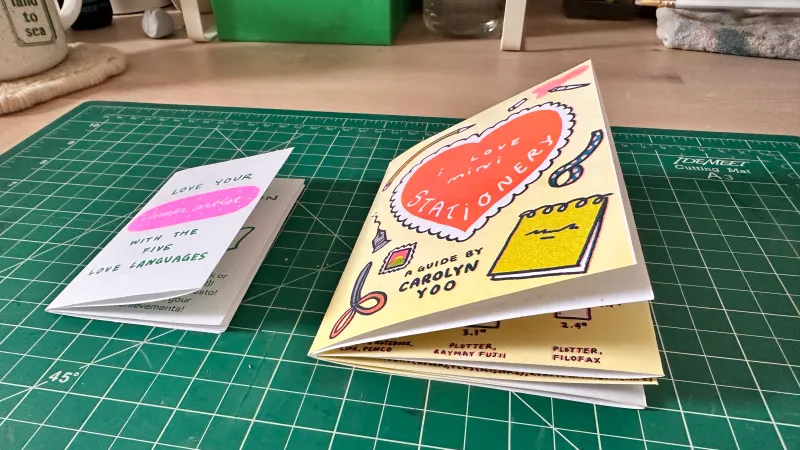
Photo: zine fair folding table with risograph printed booklets and a QR code sign, via substackcdn.com
Walk into a small-press fair on a Saturday morning and the room looks like a rummage sale with better handwriting. Card tables. A risograph humming in the corner. Somebody's mom working the door. By two in the afternoon, the aisles are jammed and a publisher is standing at a table asking a cartoonist how many issues they've got and whether they've ever thought about a collection.
That conversation is the whole thing. It's been the whole thing for years, and it's finally getting its due.
The table fee is a marketing budget wearing a costume
A table at a regional zine fest or art book fair typically runs $50 to $400, with the big-city fairs at the top of that range. For an illustrator with a hundred copies of a sixteen-page comic in a box under the table, that number feels enormous. Frame it differently and it looks like the cheapest advertising available anywhere.
A hundred copies at a small riso shop runs roughly a dollar to a dollar and a half each, depending on page count and how many colors you can talk yourself out of. Sell them at six or seven bucks and you've broken even around copy twenty. The other eighty are profit, trades, and business cards that people actually keep.
That's the part nobody explains: a zine is a business card that lives on a shelf for years instead of a pocket for a week.
Fifty copies is a real print run
The instinct for a first project is to print a thousand and announce yourself. The smarter move, and the one you see over and over at these fairs, is to print fifty and see what happens. Fifty copies is enough to find out whether the joke on page nine lands, whether the cover reads from six feet away, whether anyone asks for a second issue.
It's also enough to sell out. A sold-out table on Sunday afternoon does something for a creator's brain that a half-full box never will, and it costs almost nothing to get there.
The mailing list is the actual asset
Watch a good tabler for ten minutes. They don't just take the five dollars. There's a QR code taped to the plexi, a sign-up sheet, a little card that says "I'll email you when issue two exists." By the end of a weekend they've got a hundred and fifty names of people who have already proven they'll leave the house and spend money on paper.
That list is worth more than the weekend's till. It's the difference between launching the next book into silence and launching it into a room of people who asked to be told.
What the people with lanyards are actually looking at
Here's the thing creators whisper about in the snack line: editors, art directors, and small-press publishers walk these floors. Not always with a lanyard. Not always on a mission. But they come, because a fair is the only place in the country where you can see four hundred projects in one afternoon that haven't been through a marketing department.
What gets noticed isn't polish, usually. It's a voice that's already fully formed and a creator who clearly finished something. A twenty-page comic that ends is more persuasive than a hundred-page outline that doesn't.
The consignment economy
Half the tables in the room aren't run by the person who made the books. Distros and small shops take zines on consignment, often a 60/40 split in the shop's favor, and pay out monthly or quarterly. It's not a living, but it's a shelf in another city, which is a form of distribution most creators would otherwise never reach.
The other half of the economy is trades. Cartoonist A swaps twelve copies of her book for twelve of his. Both of them now have inventory they didn't print, and both of them go home with a reading pile that's better than anything the algorithm served them all month.
Zines as a test kitchen
Ask around and you'll find the same story: the zine was the rough draft. A six-page mini becomes a thirty-page comic becomes a graphic novel pitch, and by then the creator has already heard three hundred people react to the material in person.
That's an education you can't buy. You can only rent a table.
Public libraries have noticed. Several now keep zine collections, and a few run their own fairs, which means a teenager with a stapler and a photocopier has a legitimate venue in a building they already have a card for.
The important room in indie publishing is not a boardroom and it's not a convention hall with a keynote stage. It's a folding table with a folding chair behind it, and a box of books under it, and somebody who stayed up until three stapling and is now very excited to tell you about page eleven.