Commentary Is the Comeback: Indie Filmmakers Are Betting on the Stuff Streaming Can't Give You

Photo: Pijao editores, CC BY-SA 4.0, via Wikimedia Commons
A filmmaker I know spent two years on a feature. It got picked up for streaming, sat in a catalog for eighteen months, and then disappeared — not pulled for scandal, just quietly delisted when a license expired. No announcement. No goodbye. If you'd heard about it in month nineteen, you were out of luck.
She makes more money now selling a $40 limited Blu-ray with a commentary track she recorded in her living room with two friends and one decent microphone.
This is the shift nobody's naming yet. Extras used to be the bonus menu. Now they're the business.
The movie is a link. The extras are the object.
Streaming gave independent film an audience and then made that audience a rumor. Titles move, catalogs churn, and the thing you loved in March is a dead URL by November. That's not a failure of any one platform. It's just what a licensed catalog is.
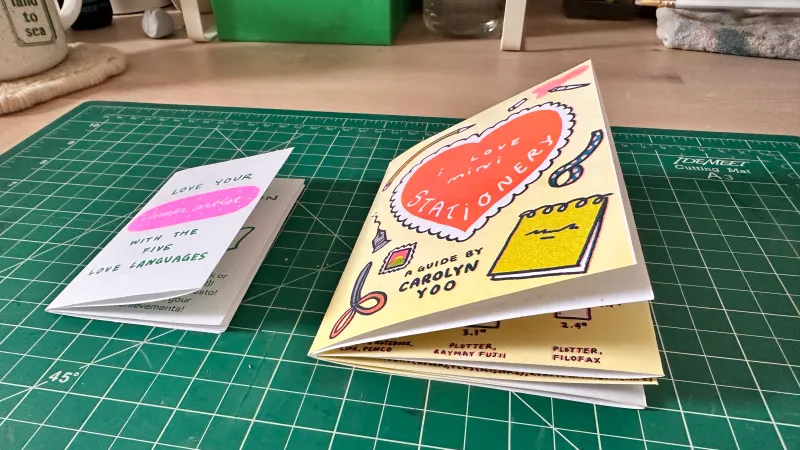
So filmmakers started making objects. A commentary track. A forty-page production zine with contact sheets and the shot list that fell apart in week two. A cassette of the score with liner notes by the composer, who has never had liner notes before in her life. A one-sheet folded the old way. A password-protected stream for the people who bought the disc.
None of that can be delisted. It's on a shelf, and it says something about the person who put it there.
What a good commentary track actually does
The lazy version is two guys laughing for ninety minutes. The version that sells discs is closer to a lecture with jokes — craft talk, decisions, the honest stuff about what went wrong and what they'd do differently. Listeners want to know how the sausage got made, and they want to hear it from the person who made it, not from a video essayist guessing.
The best ones function as a second film. Watch once for the story, watch again with the track and get the version where the director explains why the kitchen scene is lit that way. That's a product. That's worth thirty-five dollars to somebody who's already watched the movie four times.
Scarcity is a distribution strategy now
There's an ugly word for this and it's "collectible." But the mechanic is real: a numbered run of a thousand, pressed once, never repressed, sells out because people understand that a window is open. The boutique labels figured this out years ago with horror and exploitation catalogs. The filmmakers doing it themselves are just applying the same logic on a smaller scale.
The important distinction is whether the scarcity is honest. A limited run because you genuinely can't afford a second pressing is honest. A limited run designed to squeeze FOMO out of people who supported you at the kickstarter stage is not, and audiences have gotten good at telling the difference.
The zine in the case
If the disc is the object, the zine is the argument. Production diaries, storyboards in pencil, an interview with the location scout, a list of the songs that almost made it in. It costs a few dollars to print at a copy shop and it turns a movie into an artifact with a paper trail.
People photograph the zine. They post a page. Now you've got marketing that runs for free after the fact, made by people who paid you.
The risk: extras as a crutch
Here's the part that needs saying. A commentary track has never saved a bad movie. A soundtrack cassette with beautiful packaging does not fix a script that doesn't work, and a numbered slipcover is not a substitute for a scene that lands.
The extras amplify. They don't rescue. And there's a real failure mode where a filmmaker spends six months on a box set for a film that needed another six months of editing — a very 2026 kind of mistake.
But the underlying logic is sound, and it's the same logic indie musicians and cartoonists have been running for years: if your audience is small, sell them something deeper instead of hoping a bigger audience shows up. A thousand true fans who want the disc, the zine, and the commentary is a distribution plan. Ten thousand passive viewers on a service that might drop you in a licensing cycle is a coin flip.
Ship the context, not just the file
The movie is still the reason anyone cares. That doesn't change. But the thing people can hold, gift, loan to a friend, and argue about on a forum is the package around it — and in a landscape where the file can disappear overnight, the package is the part that stays.
Filmmakers are finally pricing accordingly. It took a vanishing act to make the case, but the case is made.